
Love it or hate it, social media is a necessary part of connecting and engaging with today’s consumers in any industry. Yes, it’s time-consuming to do it right (or even at all). With all the platforms, algorithm changes, privacy considerations, trends, posting strategies — the list goes on — we know it can be overwhelming.
You may have an entire internal team dedicated to keeping your social feeds full and fruitful. You may have an outsourced team who handles it for you, creating the need for coordinated collaboration to ensure brand standards are met and consistency is maintained. You may pawn your social media off to your revolving door of interns because, you know, the youths know what they’re doing online! Or you may be a one-man show squeezing in caption writing and Canva creations in between meetings about budget cuts and looming deadlines. In any of these scenarios, it’s important to keep a pulse on the trends and your brand, regardless of who is creating, posting, engaging and monitoring your social media channels.
The Importance of Social Media for Healthcare Brands
However complicated it may be, social media is an important part of your brand experience for your patients, employees and other stakeholders. Today, there are 4.9 billion users on social media worldwide, which is projected to reach 5.85 billion by 2027. In the US alone, 90% of our population uses social media. NINETY PERCENT. Millennials and Gen-Z make up the heaviest users, and Facebook is still king of the social media hill in terms of number of users. Americans in particular spend about 2.5 hours per day on social media and have an average of 7 social media accounts. It’s where people are spending their time, and it’s a fragmented landscape to navigate.
But don’t misunderstand: people aren’t just using social media for cat videos anymore. Thirty-one percent of consumers use social media to find answers to their questions. And when it’s a health-related question, why not be a trusted voice for your patients and community? Especially when 47% of Americans say they are concerned that health-related information is only focused on selling services rather than accurately answering their questions.
For healthcare brands, it’s important to keep in mind that you’re not on social media to sell. Sure, promoting services can be part of the conversation, but you’re ultimately there to connect, share and engage with your audience. Meeting them where they are and playing by the rules of social media etiquette. When crafting content for your healthcare audience, keep these tips in mind:
Tip #1: Create Content to Engage
Tracking engagement on social media is key to understanding what your audience wants to see from your brand. More than just the sheer volume of followers, it indicates whether your content is resonating and being seen by your audience.
When developing content, at a foundational level, it should always communicate clearly with the basic rules of grammar, spelling and punctuation just like any other communication channel (a misplaced typo can erode trust and credibility faster than you think). But to drive engagement, the rules and recommendations associated with the social platform, along with understanding your audience, should be factored in as well.
Social Platforms at a Glance
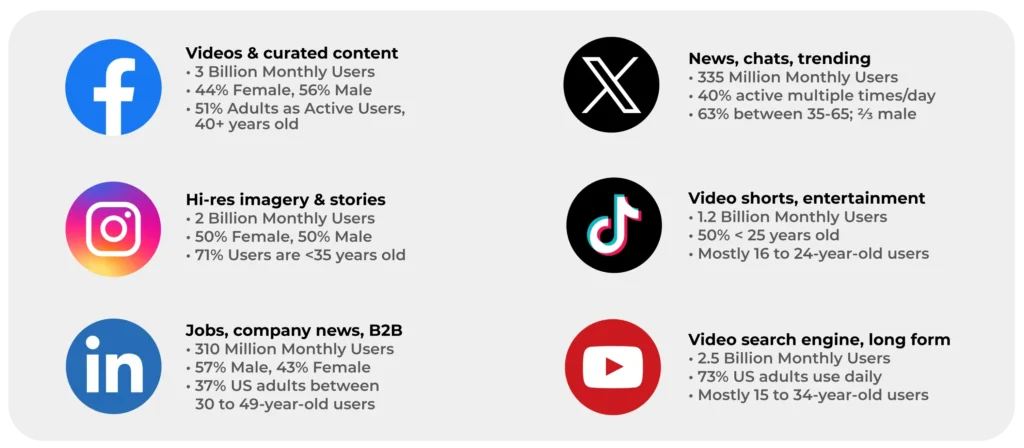
Whether you’re managing one or six channels on social media for your healthcare brand, be sure you understand the platform itself including:
- Who is the audience on this platform? (in general and on your page in particular).
- What types of content is this platform best for? Short videos, photos with faces, long-form writing, etc.
- What are the specs associated with producing content for this platform? Size of images, length of post copy before it’s truncated, etc.
- What are the hashtag best practices for this platform? Are they best used in the caption itself, or should they be included in the comments? Are hashtags even relevant at all for this platform?
What’s great about producing content based on your overall content calendar is that you can repurpose the same content across different platforms. But be sure to tailor the content to that specific channel to enhance performance and engagement. Resist the urge to take a flier or other print piece and post it as is on a social media channel. It just won’t translate well. To test, preview your content ahead of time on desktop and mobile.
Post a variety of content that works for the channel, reviewing performance data to see what your particular audience responds most to. In addition to content type, vary the topic as well. Feel-good stories, patient testimonials and staff features are all great ways to pique interest. Show off your efforts in the community. Use social media to give a glimpse into the world of your brand experience. Additionally, ask questions and offer a poll to encourage interaction to drive engagement as well.
Tip #2: Be Consistent with Your Brand
Social media is a place for your current and future patients, as well as employees, to engage with and experience your brand. In a world of consumer-driven healthcare, your online brand plays a big role in patient experience, perception and satisfaction. Your brand on social media should be consistent with your website and physical locations. Consistency creates credibility and trust. Trust builds a relationship. One Doctor.com poll reports that 63% of people select providers based on their strong online presence. So your online brand matters!
Consider all aspects of your brand on social media – how you look, how you sound, what it’s like to experience your brand and what perception you are creating in the minds of your patients:
- Visuals: Is your logo used correctly for profile pictures and cover photos? With post content that is created, are your brand standards being adhered to? Treat this marketing channel just like any other aspect of your external brand, like signage on a facility or ads placed on billboards.
- Messaging: The tone of voice should reflect your brand standards and be consistent no matter who is posting. Your social media content should reflect your unique position in the marketplace.
- Experience: Your online presence may be the first place a potential patient comes in contact with your brand. This can be the first impression, so make it count and ensure it authentically reflects your brand.
Be sure to showcase all aspects of your brand, considering what it’s like to work for your company as well as what it’s like to be a patient. Your social media channels are just as much a place for your future staff and employees as it is for patients and the community.
Tip #3: Be a Source of Accurate Health Information
As a healthcare organization, your role in social media presents a unique opportunity. One PwC report found that 90% of 18- to 24-year-olds said they would trust medical information shared by others in their social media networks. This has to be higher than how much they trust their parents! It’s crazy to realize the power of social media networks, and that’s why doing your part is so important. If 2020 taught us nothing else, it’s the dangers of misinformation (and disinformation) online.
Consider a healthy dose of informative posts within your social media content strategy. It’s not always pandemic-level information that needs to be corrected and shared, but relevant seasonal content around flu vaccines or stroke prevention that can benefit the community. Accurate information also doesn’t have to be boring. You can still create engaging content with visuals, videos, etc. that help to spread health information. Do your homework, share the data and help educate the public.
Ultimately, social media is a channel from which people are still learning to source and fact-check information. Be that trusted source of health information in your community. You can become a go-to resource of real people with real expertise outside of the AI and bots of it all.
Tip #4: Listen To Your Community
In its essence, social media was created for the purpose of connection, sharing and communicating. So you have to be prepared to engage in that way and be ready for conversation. Listening can include:
- Respond to comments and messages: If the commenting function is on, people are going to use it — and it’s not always bad! The same goes for direct messages or even posts on their personal pages about their experiences with your healthcare organization. Responding to even the smallest comment or message when it’s positive shows that there are real humans behind the page who are listening and ready to engage.
- Answer questions: You don’t want to give medical advice online, but you should have some pre-written responses for basic questions you can answer. You want to provide helpful information without infringing upon HIPPA guidelines or other regulations. Simple questions like where to find a location or how to schedule an appointment online could be quick to address with a response.
- Address complaints: Resist the urge to delete negative comments and complaints. Just like in life, it’s more important to people how you handle a situation than what was wrong in the first place. We typically recommend a simple acknowledgment and steps to address the complaint offline for our clients. Answering a complaint on social media can increase customer advocacy by 25%!
- Monitor hashtags: Another way to listen online is to monitor hashtags for trending topics to inform your content. Take advantage of software like Sprout Social to keep a pulse on what’s relevant.
Tip #5: Follow HIPAA Compliance in your Social Media Practices
It shouldn’t need to be said that as a public communications channel, social media is bound by the same HIPAA guidelines that inform all of your organization’s external communications. With the rise in personalization and data collection online, make sure your healthcare organization is following all applicable HIPAA regulations and patient privacy laws. As a good rule of thumb, make sure none of your social media content ever contains protected health information (PHI).
Tip #6: Be Prepared to Pay to Play
At the end of the day, social media companies are businesses that need money to run. In the last few years, many social platforms have morphed into a media channel for marketers, and not just a place to connect organically between consumers. Unfortunately, the algorithms are set up to encourage this pay-to-play model. So if you’re frustrated that you haven’t gotten much organic action on your posts or your follower count, it’s time to explore the paid side of these platforms.
In focusing on Facebook, here is a quick reference chart to understand the difference between these two paid methods: boosted posts vs. paid ads:
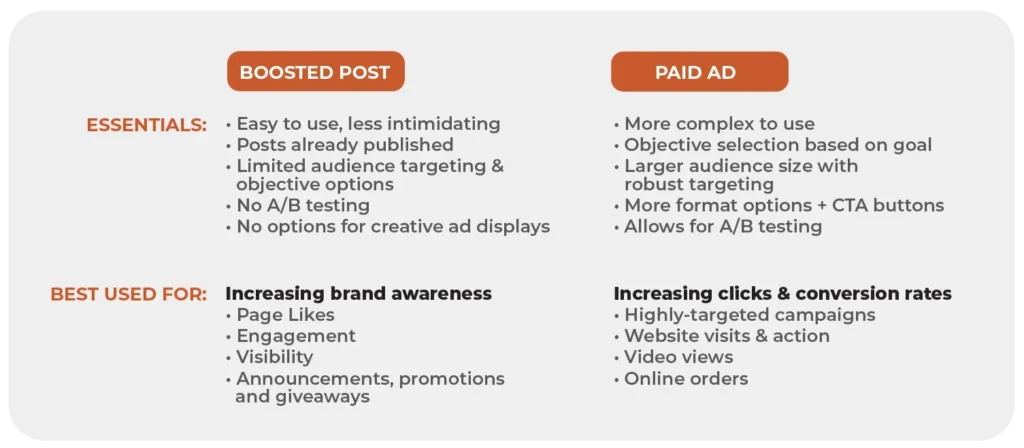
Like any other advertising channel, your paid strategy should factor in your goals, audience and budget to ensure you’re reaching the right person with the right messaging.
Building Brand Leadership with Social Media
In the ever-evolving world of social media, it’s great to stay on top of trends, try new things, reach new audiences and connect with your community. Above all else, as with any communications or marketing efforts, stay true to your brand. Be authentic. Be relatable. Be trustworthy. Your current and potential patients will thank you, and your brand will stand out as a reliable and engaging source of content.
Need help getting your social media strategy off the ground? Reach out to your creative marketing partners at BBR Creative. We’ve been helping healthcare organizations like yours craft meaningful connections for over 25 years.