As advertising trends continues to evolve, so do the intricate media buying strategies that tie all of its moving parts together. Cost effectiveness. Audience targeting and adaptability. Technology adoption. Campaign optimization. New advertising trends are forming each day that impact each one of these factors—trends that may cripple your competitive advantage without the right planning and market awareness.
But let’s be honest: keeping up with every new “it tactic” is tough. So we went ahead and did the hard part for you. Here are the six most important advertising trends we see happening now, and how they affect the way you create, place and experience advertising in the wild. By taking advantage of these, you can help your business adapt and thrive in today’s environment—and come out on top.
Advertising Trend 1: Elevation of CTV and OTT Channels
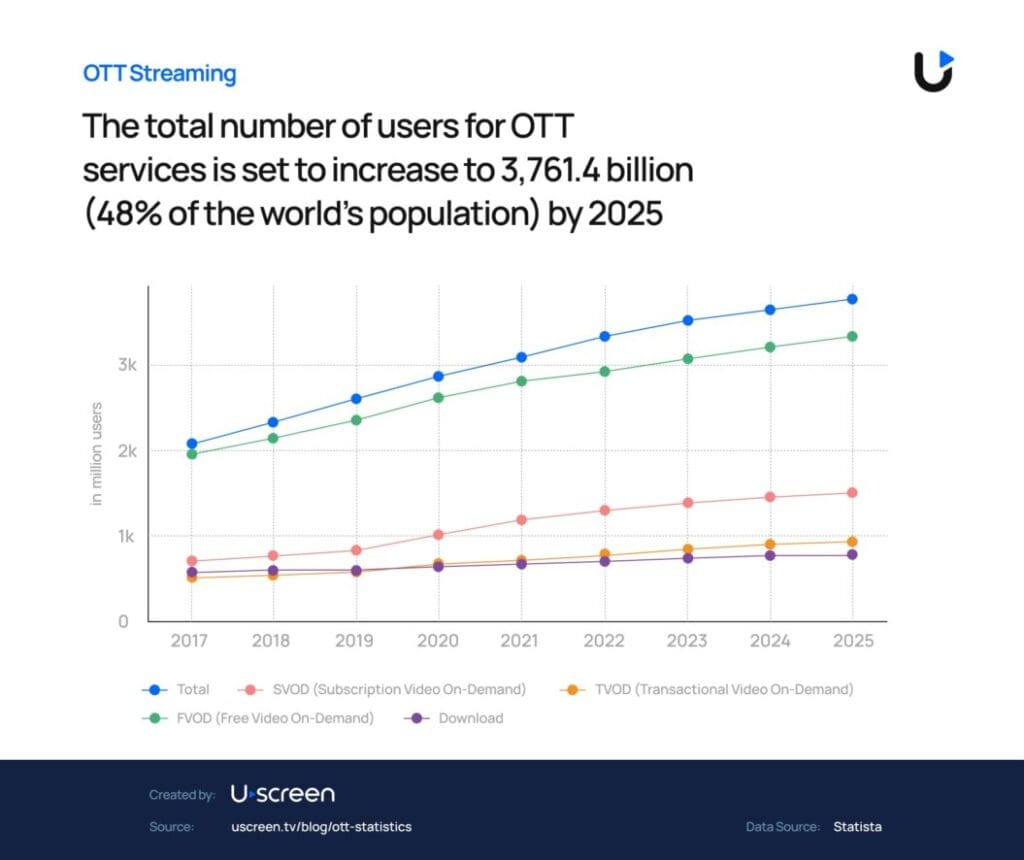
In 2024, CTV and OTT are eclipsing traditional TV viewership with online platforms like Hulu, Peacock, Youtube, Netflix and others. Because of this “attention migration,” Connected TV (CTV) and Over-the-Top (OTT) platforms—buying options that focus on online streaming and device-specific delivery—are becoming more attractive across the board for media placement. In fact, CTV alone is expected to top $27 billion by 2025 according to Emarketer forecasts.
A golden rule of media buying is to go where your audience is. So to stay competitive, advertisers need to adapt their strategies to better reach audiences consuming content on these platforms—whether that be through the addition of OTT and CTV or reallocation of budget from other placements.
Advertising Trend 2: Increased Retargeting Through Platform Shopping
Instead of shopping directly on a retailer’s website, consumers are more often preferring to shop within social platforms via organic posts, ad placements and videos. And with many platforms now providing ecommerce features built in—options like TikTok Shop, Meta Shops, YouTube Shopping and Shop App—there’s no reason to leave your favorite social media platform to find that next purchase.
So, how can media buyers take advantage of this? We recommend pairing your own shopping experiences with a retargeting push to existing audiences. This can help reduce the effort needed for these individuals to take a second peek while increasing the likelihood of purchase with in-platform checkout.
Advertising Trend 3: Social Media, the New “Go-To Search Engine”
Social media platforms no longer solely exist to update your status, share a selfie or check up on your ex. With growing user bases, changes in content consumption and powerful algorithm advancements, these platforms now rival search engines like Google and Bing when it comes to receiving and answering query requests for certain demographics.
While 44% of millennials report using Google to discover new products, brands, services and experiences, only 29% of Gen Z responded the same. For these younger consumers, YouTube (57%), TikTok (53%) and Instagram (44%) occupied their top platforms for discovery.1
So what does this mean for you and your finite media budget? For younger audiences especially, increased spend on social media will be a non-negotiable for brands moving forward with emphasis on video and interactive content that blurs the line between brand and entertainment.
Advertising Trend 4: Embracing the Power of AI
In 2023, 67% of businesses2 reported that they were already using AI to improve their content marketing results. Today, the uses for AI have expanded to every corner of advertising, from research and data analysis to ad generation and optimization. Much more than just another advertising trend, AI is quickly shifting the way the media buying industry works. Here are just a few ways media buyers are leveraging AI for better results:
- Audience Building: ChatGPT, Gemini and other AI assistants can now be used to expand custom, lookalike audiences for ad targeting. Particularly for marketers working with new brands or products/services, AI can help quickly lay the groundwork for what types of people or businesses should be included for best results.
- Real-Time Bidding & Insights: AI tools can help automate ad buying and optimize for the best placements and pricing. Additionally, they offer detailed analytics and reporting that can allow you to quickly adjust strategies as needed.
- Dynamic Ad Creation: Using a bank of creative options, AI can adjust your ads spontaneously in the wild based on user trends, interactions and preferences, leading to higher engagement and conversion rates over time.
- A/B Testing: Placement platforms offer AI tools that can automate testing of ad variations to determine which options are most effective for reaching your established goal (clicks, conversions, reach, etc.).
- Fraud Detection: AI security features can help identify suspicious activity in your digital advertising efforts, reducing unnecessary spend and limiting reporting problems that can arise from bot interference.
Advertising Trend 5: Emphasizing Influencer Impact
As all things shift towards social media, influencer marketing is becoming a lucrative tactic to support your platform ads and content in a more authentic and relatable way. But this time, influencers will have to do more than tout big follower counts. With pay-for-follow bots and plugins that inflate profile metrics, brands are becoming less focused on followers—and more focused on demonstrated impact—when it comes to engaging in influencer marketing.
Yes, this makes identifying good influencer partners more difficult. But on the flip side, it’s paving the way for micro influencers to enter the game and make an impact in niche markets with highly engaged audiences. And considering that these smaller content creators generally cost less than creators with large fan bases, it could be a win-win for both sides.
Advertising Trend 6: Shift Towards User-Generated, Lo-Fi Content
More and more, brands are turning to user-generated and lo-fi content instead of overly produced TV ads to be used on streaming, social platforms, marketing emails and websites. Not only is this more cost-effective than creating expensive TV placements—it can be more flexible in the wild while remaining attractive to audience members as well.
By including more lo-fi video content like YouTube shorts, Instagram reels and longer-form vlogs in an ad mix, we can reap the benefits of highly integrated placements and the niche audiences that engage in those spaces.
Extend Your Reach with BBR
If you’re tired of fighting the uphill battle of following the latest advertising trends to find and connect with your audiences, you’re not alone. We’ve helped businesses all across the south implement stronger media buying and placement strategies for long-term growth. Reach out today, and let’s turn up the volume on your advertising together.
Not ready to chat, but still want to learn more about media strategy for your business? Discover the key differences between B2B and B2C media buying to sharpen your skills for higher lift and returns.