Updated on 6/26/25
In the early internet days, online communities were small, focused and easy to dip in and out of — like digital clubs for your favorite hobbies. Then came social media. The rise in platforms like MySpace and Facebook flipped online socializing on its head, scraping the recesses of the internet to bring all those communities together in one big, always-on space.
Fast forward to 2025, and it feels like there’s a new platform every week. For individuals, it’s a lot. For brands, it’s even more overwhelming, with the pressure to be on every platform or risk missing out. But here’s the truth: you don’t need to be everywhere.
With the rapid growth of new social media platforms, people are finding their own corners of the internet again, just like in the old days. That’s good news — it means you can focus your efforts on fewer but more impactful platforms.
In this post, we’ll explore how brands can navigate today’s social landscape by honing their social media marketing on what actually works.
Facebook
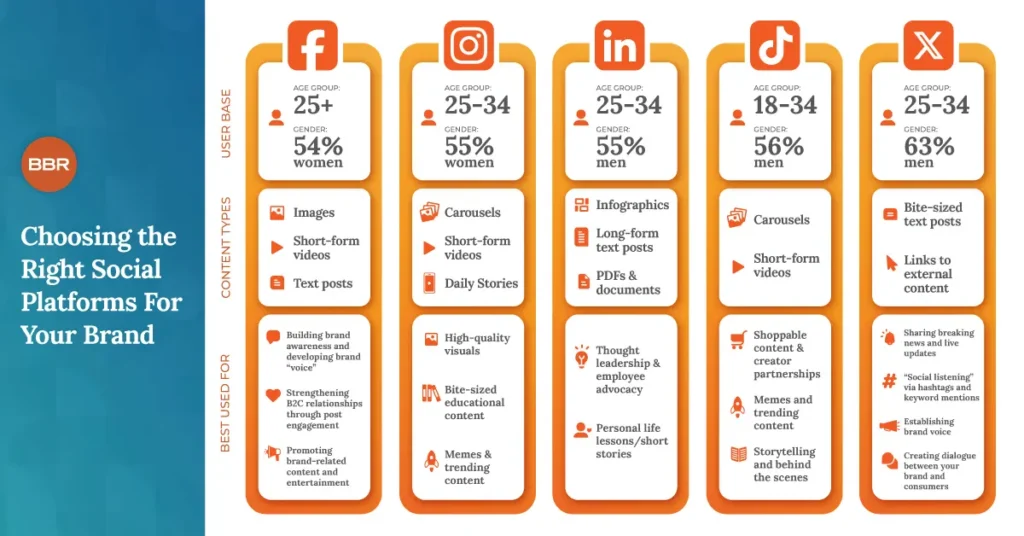
At this point, Facebook is less of a platform and more of an extension of our collective psyche. It’s integrated into almost every facet of life, and the effects are evident: Postdoctoral research in Berlin found that the reward center of human brains responds to Facebook engagement activity in the same way it would to cocaine. Regarding online presence, though, Facebook is still the social platform juggernaut. It has over 3 BILLION monthly users, tracking an enormous amount of demographic data in the process. The platform’s highly diverse user base allows brands to connect to hyper-targeted audiences. Dominant Demographics: Age Group: 25+ Gender: 54% women Best used for:Instagram
Created on the idea that everyday people should be able to share quality photos, Instagram turned Sharon from Accounting into @Sher.jpg, trendy food and style photographer. The app has over 2 billion monthly active users. Not surprisingly, the majority of Instagram users come from outside the U.S., making the platform a strong contender for global campaigns and initiatives. Dominant Demographics: Age Group: 25-34 Gender: 55% women Best used for:LinkedIn
If big business is your focus, look no further than LinkedIn. As a professional networking platform, it should come as no surprise that over half of LinkedIn users have annual incomes over 100k. Possibly, the best part about LinkedIn, from a business perspective, is that there’s very little guesswork involved. You KNOW why the users are there. Using each individual’s profile, you have access to their complete professional history and, through deduction, even their interests. If you’re looking to elevate your brand’s authority and target some prime talent in the process, this is your breadwinner. Dominant Demographics: Age Group: 25-34 Gender: 55% men Best used for:
Click to Download →
Choosing the Right Platforms For Your Brand
So you know that you don’t need to be on every social media platform, but you still need to show up in some places. So, how do you choose? In short, your ideal social media platform will be where your most direct audience is and uses content formats that work best for your brand.- Building brand awareness and developing brand “voice”
- Strengthening B2C relationships through post engagement
- Promoting brand-related content and entertainment
- High-quality visuals
- Bite-sized educational content
- Short-form video (Instagram is TikTok’s highest competitor)
- Memes and trending content
TikTok
As we all likely know — and are tired of hearing by now — TikTok has completely changed the social media game. TikTok is still relatively new to the social media scene but has seen unprecedented growth over the past few years despite privacy and security concerns. With 1 billion monthly active users spending an average of one hour scrolling every day, it’s no wonder brands are scrambling to get in front of this constantly growing audience. Known for short-form videos spanning from dance covers and makeup videos to educational content, “unboxings,” and even full comedy sketches, this platform offers a little bit of everything for users and brands looking to make a mark. Dominant Demographics: Age Group: 18-34 Gender: 56% men Best used for:- Short-form video
- Shoppable content & creator partnerships
- Memes and trending content
- Storytelling and behind the scenes
- B2B powerhouse, now more content-driven than ever
- Thought leadership & employee advocacy
- Personal life lessons/short stories
X (FKA Twitter)
As the artist platform formerly known as Twitter, X has been making itself known in the news lately. Between dicey leadership changes, accusations of algorithm biases and controversial content moderation policies, many brands and advertisers are pulling back from this platform completely. Despite the changes X has seen lately, the platform still boasts around 600 million monthly users, with everything from news updates and link shares to Meryl Streep memes getting pumped across the platform. All of this to say, X isn’t entirely a lost cause — it still has a viable user base that can be easily accessed through hashtags and keywords if you’re savvy. Dominant Demographics: Age Group: 25-34 Gender: 63% men Best used for:- Sharing breaking news and live updates
- “Social listening” via hashtags and keyword mentions
- Establishing brand voice
- Creating dialogue between your brand and consumers