
Often considered bold moves for strategic growth, mergers and acquisitions are commonplace in today’s business world. They can unlock new markets, expand customer bases and create powerful opportunities for innovation. But beneath all the financials and operational strategies lies another critical factor leaders can’t afford to ignore: their brand.
When two organizations come together, or when one company acquires another, the way the brand is handled can determine whether customers and employees feel inspired by what’s next or alienated by unwelcomed change. This is especially true in service-based industries like healthcare, financial services and utilities, where trust is central to every relationship.
Handled well, rebranding in a merger or acquisition can create excitement, strengthen loyalty and unify teams. Handled poorly, it can spark confusion, fuel distrust and even contribute to negative PR (ahem, Six Flags).
So how do you make a smooth brand transition without stepping in it? Below, we outline five recommendations that can help you navigate rebranding during a merger or acquisition like a pro.
1. Evaluate Your Existing Brand Equity
The first step in any rebranding process is to evaluate what already exists. Every brand carries with it a certain amount of equity—trust, awareness and recognition—that can either work for or against you in a merger or acquisition.
To identify what your brand equity may be, ask yourself:
- How long has my brand been in use?
- How loyal is my customer base?
- Does the brand carry historical or family significance?
- How much has it been invested in and promoted through marketing?
Understanding the answers to these questions helps avoid discarding valuable equity that customers already trust. In many cases, it’s wise to retain some elements of an existing brand, even if the parent company takes the lead.
This evaluation shouldn’t be left to instinct alone. Consider conducting primary research like brand perception studies or customer surveys to gather data-driven insights. Research partners like MDRG specialize in this type of research, providing formal evaluations to guide decisions with confidence.
At the same time, it’s also helpful to take a fresh look at your competitive landscape. What positioning do your competitors own, and where could your rebranded entity stand apart?
In Practice: When Cox Communications merged with Charter Communications, the Cox family recognized the historical strength and trust associated with their name. Rather than discarding it, Cox Communications became the parent company, while Charter’s product names (Spectrum) remained in play. This thoughtful approach allowed both brands’ equity to continue working toward the companies’ shared success.
2. Develop Your Brand Strategy
Once equity is evaluated, it’s time to establish a clear brand strategy. No, this isn’t just choosing a name or designing a new logo. For this part, you’ll be creating a roadmap for how all brands in your ecosystem will work together moving forward.
For this step, here’s what you want to think about:
- Will all acquired companies adopt the parent name exclusively?
- Is there an opportunity for sub-brands to retain their identities?
- How will the strategy evolve as new acquisitions occur?
Remember, your brand strategy should serve as a long-term playbook. Even if every detail isn’t finalized, defining principles and guidelines early helps prevent inefficiencies and inconsistencies down the road.

In Practice: When Elite Therapy Solutions acquired Precision Rehabilitation, along with operating Elite Integrated Therapy Centers, they faced a patchwork of brand identities. Without a unifying strategy, marketing efforts were fragmented and confusing, leading to unnecessary efforts on the production side with limited results.
Partnering with our team at BBR helped them establish a cohesive brand strategy, ensuring consistency and efficiency across their portfolio while honoring existing equity where it mattered.
3. Launch Internally First
Imagine learning about a major decision in your family through a press release. You’d likely feel hurt, excluded and unimportant. Now flip that: imagine being invited into the decision early and trusted with insider knowledge. That sense of pride translates directly into energy and enthusiasm.
With that in mind, your employees should always be the first to know about a rebrand. After all, they’re your biggest ambassadors, advocates and the ones who will deliver the brand promise every day. If they find out about changes at the same time as the public, they may feel devalued or blindsided.
An internal launch can be scaled to fit your organization, but it should feel inclusive and meaningful. Go beyond an email announcement—host a pep rally, an internal “press conference,” or a celebratory event. Share the backstory, the “why” behind the rebrand and how it benefits everyone. Consider providing branded swag, videos or even fun giveaways to mark the moment.
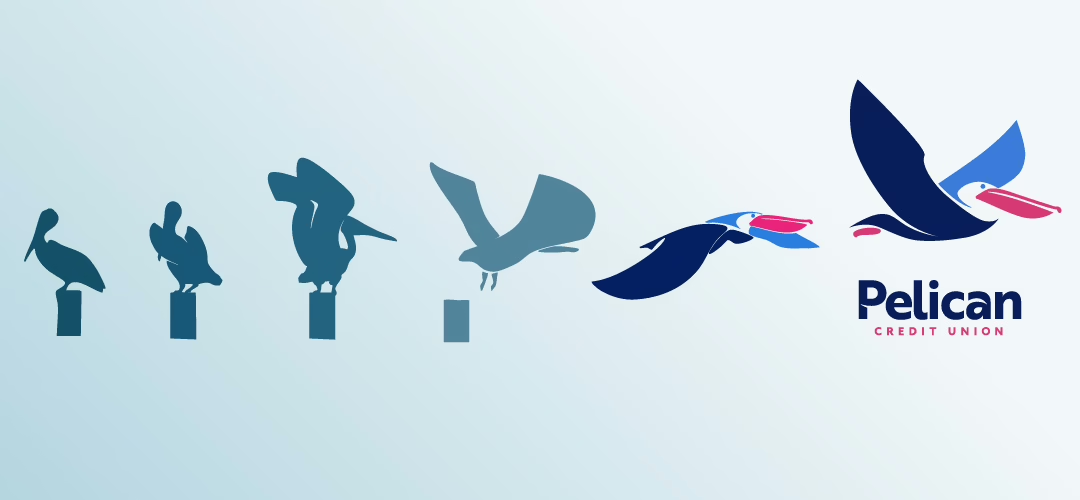
In Practice: While not specifically related to M&A, Pelican Credit Union recently went through a rebranding with BBR to match their evolution and growth strategy. They used their annual staff celebration—the “Pelican Family Reunion”—to unveil their new brand.
Employees were given branded swag and shown a hype video that showcased the credit union’s vibrant new identity. These thoughtful touches resulted in a brand reveal event that created momentum and pride, which will ripple outward to members.
4. Be Intentional with External Communications
Once your team is aligned and excited, your focus should shift to your target audience, whether they be customers, members or patients. Clear, transparent communication here is essential. People should never feel tricked or left in the dark about a merger or acquisition.
Keep in mind that information should be shared first, and marketing comes second. Start by communicating what’s happening, why it matters and how it affects them. Layer in brand storytelling and promotional campaigns only after establishing clarity around your “why” for rebranding.
The key elements of a strong external communications plan include:
- A dedicated webpage with FAQs and contact information
- Formal letters mailed to customers
- Email updates that are clear and concise
- App notifications or text alerts, if applicable
- Coordinated timing with press releases and media
This approach minimizes confusion, builds trust and reassures your audiences that their needs remain a top priority.
In service industries like healthcare and financial services, transitions often involve sensitive relationships. By being upfront and proactive with communications, companies can avoid the perception of a “bait and switch” and instead frame the rebrand as a positive evolution.
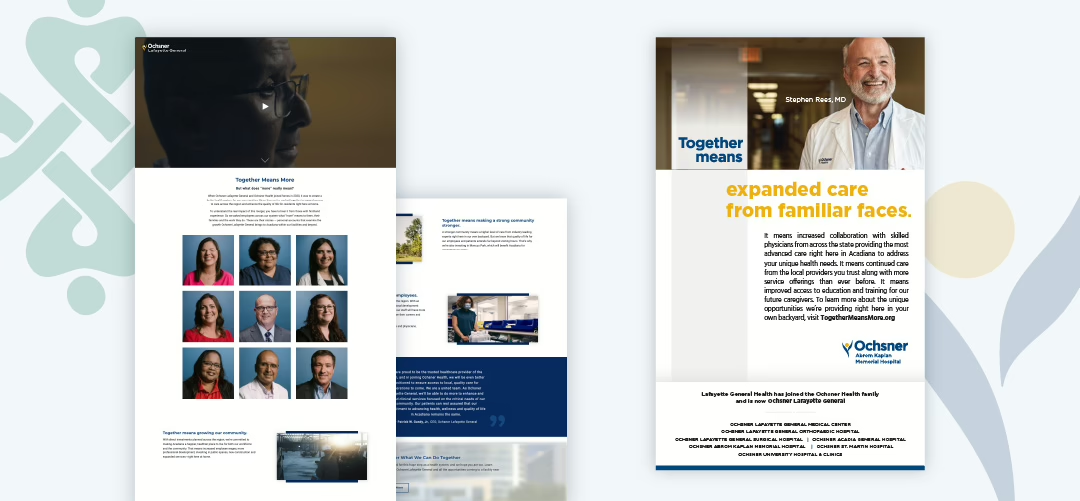
In Practice: When Ochsner Health acquired Acadiana-based Lafayette General Health, the organizations collaboratively sent out communications directly to all affected parties including patients, employees, referring providers and more. Letters and emails detailed the merger, discussed expected changes, and reinforced what would not change. Key audiences were provided resources for more information, along with a landing page recapping key details of the newly formed Ochsner Lafayette General.
Following direct communications to key audiences, the health system launched a multi-channel campaign driven by the core message, “Together Means More.” The campaign highlighted positive aspects of the newly forged partnership like jobs creation, greater investments in technology and specialty healthcare services, and enhanced patient care, as told through the perspective of Ochsner Lafayette General employees.
5. Consider a Phased Approach
Finally, remember that rebranding doesn’t have to happen overnight. In fact, a phased approach can often reduce risk and ease the transition for customers.
Phased rebranding allows for a gradual rollout, introducing customers to new logos, names and messaging over time rather than all at once. This can be especially helpful for legacy brands that have deep roots in their communities.
In Practice: As the Keesler Federal Credit Union and Jefferson Financial Credit Union merger is executed, they have adopted a phased strategy and rollout timeline. Initially, Jefferson is operating as “a division of Keesler Federal,” giving members time to adjust. By early 2026, the full transition to Keesler Federal Credit Union will be complete. This approach provides clarity while respecting customer familiarity.
Streamline the Next Chapter of Your Brand
Rebranding during a merger or acquisition can be both a challenge and an opportunity. Done right, it can unify company cultures, build trust and create momentum for growth. Done wrong, it can erode equity, frustrate employees and alienate customers and prospects.
Despite existing in a world obsessed with bottom lines and data, we have to keep in mind that mergers and acquisitions are about people coming together. Creating new relationships and cementing trust are mission-critical.
Want help along the way? Let’s chat and see how we can bring your next phase to life.