Building Customer Journey Maps That Work
Today, marketing leaders are no strangers to navigating audiences who expect seamless, personalized experiences at every touchpoint. But when you’re juggling multiple priorities — campaign deadlines, budget pressures, cross-functional alignment — it can be easy to lose sight of how real people are actually engaging with your brand. That’s where customer journey mapping comes in. Done well, it’s not just another planning exercise; it’s a way to uncover blind spots, sharpen your strategy and ensure your marketing is aligned with what your audience truly needs in the moments that matter.
This guide walks through how to build a journey map you can put into practice and how to translate those insights into full-funnel marketing strategies that drive both short-term wins and long-term loyalty.
Understanding Your Customer’s Journey
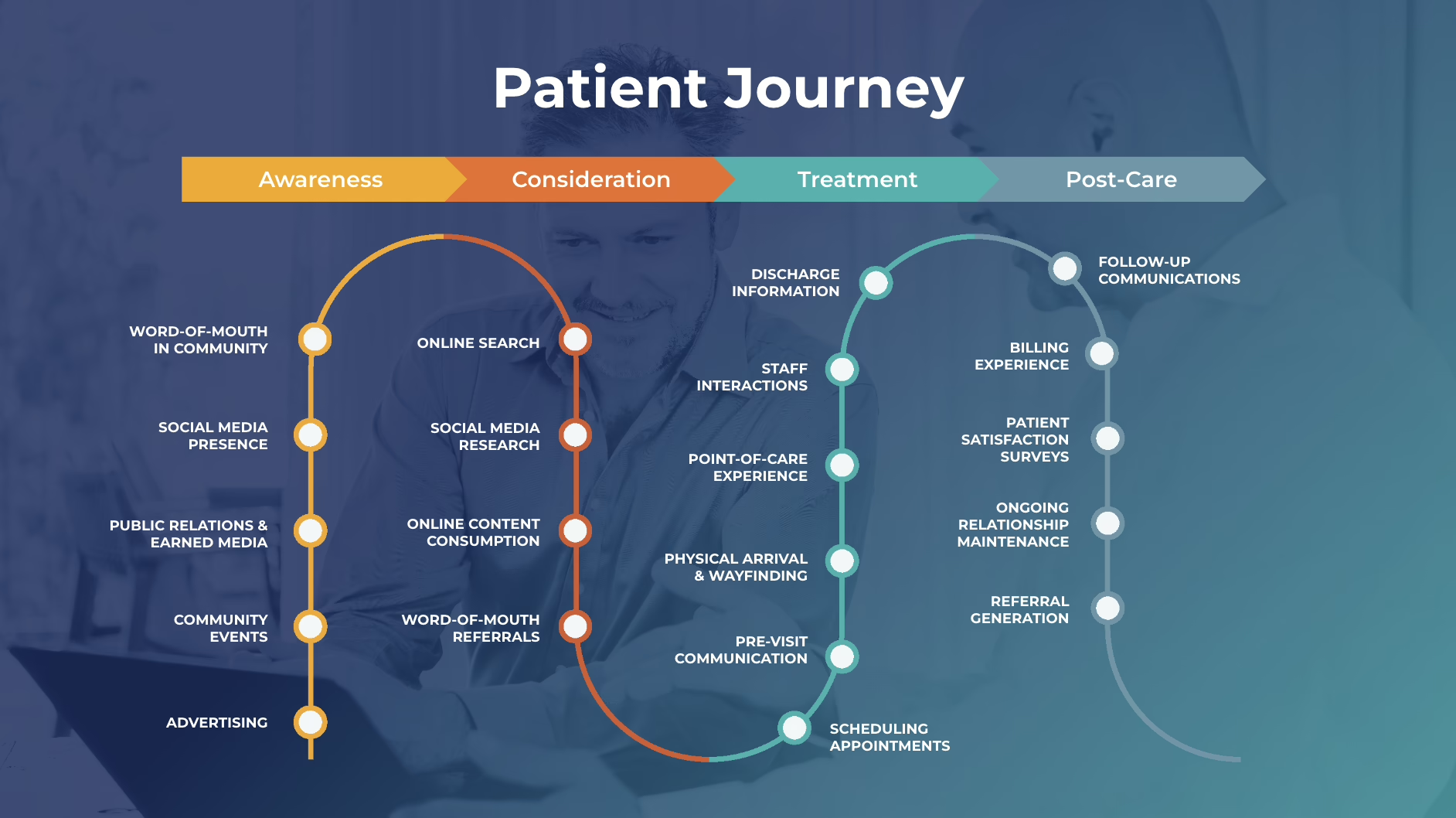
n today’s fast-paced, internet-dominated world, customers aren’t making purchase decisions in a straight line — it’s more like a winding road with detours, pit stops and the occasional U-turn. They’re weighing options, comparing experiences and responding to dozens of brand interactions along the way. The companies that win don’t just react to this journey; they design for it, ensuring each interaction moves the customer closer to choosing them.
Mapping their journey gives you the insight to guide them straight to you.
Identify Stumbling Blocks
By understanding the full life cycle of your customer, you can identify where prospects stall or drop off. Fixing these kinks in the process keeps their journey flowing toward conversion.
Drive Customer Retention
Marketing for the customer journey demonstrates to your audience and team that customers are your top priority. And when customers feel valued, they stick around.
Improve Business Results
Ultimately, a good customer journey map is designed to improve business results. Mapping the path from awareness to loyalty reveals gaps and strengthens connections with your core audience. The result? Higher engagement, more conversions and stronger brand loyalty.

Building a Customer Journey Map
More than a simple marketing exercise, customer journey mapping offers a strategic framework that helps you see your brand through the eyes of your audience. For marketing leaders, this tool becomes especially powerful when it moves beyond theory and into practical, measurable actions.
The steps below outline a process designed to help you clarify goals, uncover friction and align teams so you can turn journey insights into tangible business results.
Step-by-Step Guide
1. Align on outcomes and constraints
What is it that you’re trying to accomplish? Is it revenue growth? Appointment bookings? Think about roadblocks such as budget, time constraints and legal compliance. How do these affect your goals? Put additional guardrails in place — such as timing, markets and products — to provide further clarity.
Pro tip. Write it all out in one sentence: “We’re mapping to increase ___ by ___% for ___ segment within ___ months, without exceeding ___ constraint.”
2. Select priority audience segments
Go beyond generic demographics — craft personas using real data that is anchored in the behaviors of your target audience. Start with high-value cohorts (“parents booking sports physicals in July–August,” for example), and then layer on additional context: What are they trying to accomplish? What are their anxieties? What are they thinking, feeling and doing? Validate these assumptions with real data from CRMs, focus groups, interviews, POS systems and other relevant sources.
3. Define journey phases
We all know the textbook “awareness -> consideration -> conversion” funnel. But let’s go even deeper, diving into the relevant phases that reflect reality for your specific business. Here are just a few examples:
Healthcare (appointments): Symptom → Insurance/eligibility check → Provider search → Scheduling → Prep → Visit → Billing/follow-up → Ongoing care
Financial (account/loan): Need → Research/comparison → Pre-qualification → Application → Onboarding → Usage/upsell
CPG (retail/DTC): Need → Discovery (retail/digital) → Trial → Purchase → Usage → Repurchase/subscription → Advocacy
Understanding the unique journey for your audience will be the key to rising above the noise and meeting them where they are with your marketing message.
4. Identify all brand touchpoints
Create a comprehensive matrix outlining all possible interactions individuals may have with your brand throughout each phase of their journey. Take into account your owned, earned and paid media, along with your services and operations, like call answering, membership/patient portals or return processes.
5. Diagnose pain points
dentify the emotional and functional elements that could be causing friction for this audience. Every phase they go through will either push them to the next one or stop them in their tracks. Go through each one with a fine-toothed comb to ensure there’s as little disruption as possible.
6. Identify opportunities
With all of your sticking points laid bare, it should be easier to identify opportunities for improvement. Prioritize through an impact versus effort lens, focusing on changes that will have the greatest impact on moving the needle forward, given your constraints. Assign owners and target dates to ensure follow-through.
Pro Tip. Score each idea on expected impact, effort, risk and time-to-value. Then divvy them up between fast wins and long-term endeavors.
7. Implement, measure, refine
Define success metrics per phase; make this as measurable as possible. For example:
Because [insight], if we [change], then [metric] will improve by X% for [segment] during [phase].
Once you’ve implemented your changes, refer back to these metrics often. Remember, this isn’t a “set it and forget it” situation. If your success metrics aren’t being reached, it’s time to adjust and refine your approach.
Get the Templates
Customer journey mapping can be daunting, but luckily, you don’t have to start from scratch. Download our customizable templates for mapping by audience segmentation, lead nurturing, customer churn and more.
Customer Journey Download
"*" indicates required fields